
Essay on Religion: Meaning, Role, and Impact on Society
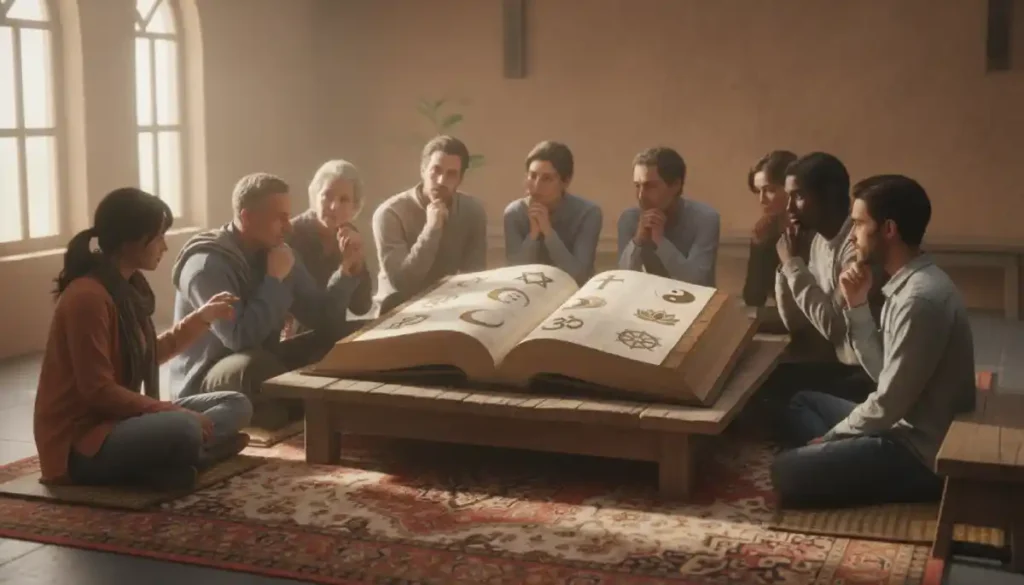
Throughout history, few things have influenced human society as much as religion. From the first beliefs in spirits to the major world religions we know today, religion has helped generations make sense of life. It is an important part of being human, giving answers to big questions about life and bringing people together through shared practices and beliefs.
To understand religion, this essay on religion looks beyond just basic ideas of worship, showing how beliefs shape communities, morals, and meaning in life. It’s about seeing how these beliefs shape our communities, guide our sense of right and wrong, and give people a sense of meaning in life. This shows that religion isn’t just something from the past—it still plays an active role in today’s world.
What Is Religion?
Defining religion isn’t easy and has puzzled scholars for a very long time. Most people see it as believing in and worshiping a higher power, like a God or gods, but it actually means more than that. Religion is made up of symbols, beliefs, and practices that bring people together as a community.
Martin Luther King, Jr. said that religion answers people’s need for hope and a sense of certainty. Unlike science, which looks for explanations and causes, religion focuses on meaning and purpose. It also plays a social role, helping shape the identity of the people who follow it. From the ancient stories of Judaism to the rituals of Indigenous traditions, religion gives people a way to understand the world and their place in it.
Origins and Development of Religion
Religious practices go back to the very beginning of human history. Early religions were simple and closely connected to nature, often involving the spirits people believed lived in it. These beliefs helped early humans understand things in the world around them, like the changing seasons and the mystery of death.
As societies grew more complex, their religious systems also became more developed. Ancient civilizations like Egypt and Greece had many gods, while later, religions with one God began to appear. Over time, these beliefs grew from small local or tribal practices into major world religions with written teachings, detailed beliefs, and large organized institutions.
The Role of Religion in Society
Religion helps bring people together in society. Sociologists say that one of its main roles is to build a sense of community. By creating shared values and rules, religion encourages people to work together and support each other.
It also helps guide how people behave by showing what is considered right and wrong and discouraging actions that go against these rules. Besides guiding behavior, religion offers social support. Churches, mosques, temples, and other religious groups often provide education, healthcare, and help for those in need. They also serve as places where people can feel part of a community and get support during important changes in life.
Positive Impacts of Religion
Religion often brings important social benefits. Throughout history, it has inspired art, buildings, and writing, leading to some of the greatest cultural accomplishments of humanity.
Also, religious teachings often form the basis of moral systems that respect human life and dignity. Many religions emphasize the idea of valuing life and seeing every person as important. This has inspired efforts for social justice, civil rights, and peace. On a personal level, religion can give people emotional support, helping them deal with grief and find purpose during difficult times.
Essay on Religion Explaining Criticism and Challenges
However, religion also comes with its challenges. Throughout history, it has sometimes been used to justify conflict, unfair treatment, and division. Events like the Crusades and the Inquisition show how strong religious beliefs can be turned into a tool for harm.
Critics also note that strict religious rules can sometimes slow down scientific progress or social change. When religious groups resist modern ideas or treat certain people unfairly, they can create tension in a diverse society. The challenge is finding a balance between old religious teachings and today’s views on human rights and equality.
Religion in the Modern World
Nowadays, the connection between society and religion is changing. Even though some thought that modern life and the growth of science would make religion disappear—a process called secularization—religion is still an important part of people’s lives.
Science and religion are now often seen not as opponents, but as different ways of thinking. Science gives us knowledge and practical power, while religion offers guidance and moral direction. In today’s fast-changing world, many people feel that science by itself can’t fulfill the human desire for meaning or spiritual connection. As a result, religion changes and finds new ways to express itself, while still shaping discussions about politics and ethics.
Personal Belief, Identity, and Meaning
In the end, religion is very personal, a point explored throughout this essay on religion. It isn’t just about religious teachings but about what someone actually experiences. For most people, faith is less about following strict rules and more about finding a personal connection with the divine.
Religion gives people a story to help shape who they are. It helps them answer the question, “Who am I?” by showing how their life fits into a bigger picture. Feeling connected to something larger gives strength, helping people handle the challenges of everyday life with a clear sense of purpose and direction.
Conclusion
Religion continues to play an important role in people’s lives. It gives meaning, brings communities together, and influences both stability and change. Even though it faces criticism and has to adapt to a modern, scientific world, it still provides hope, shapes values, and connects people. That’s why understanding religion is key to understanding society, a focus of this essay on religion.